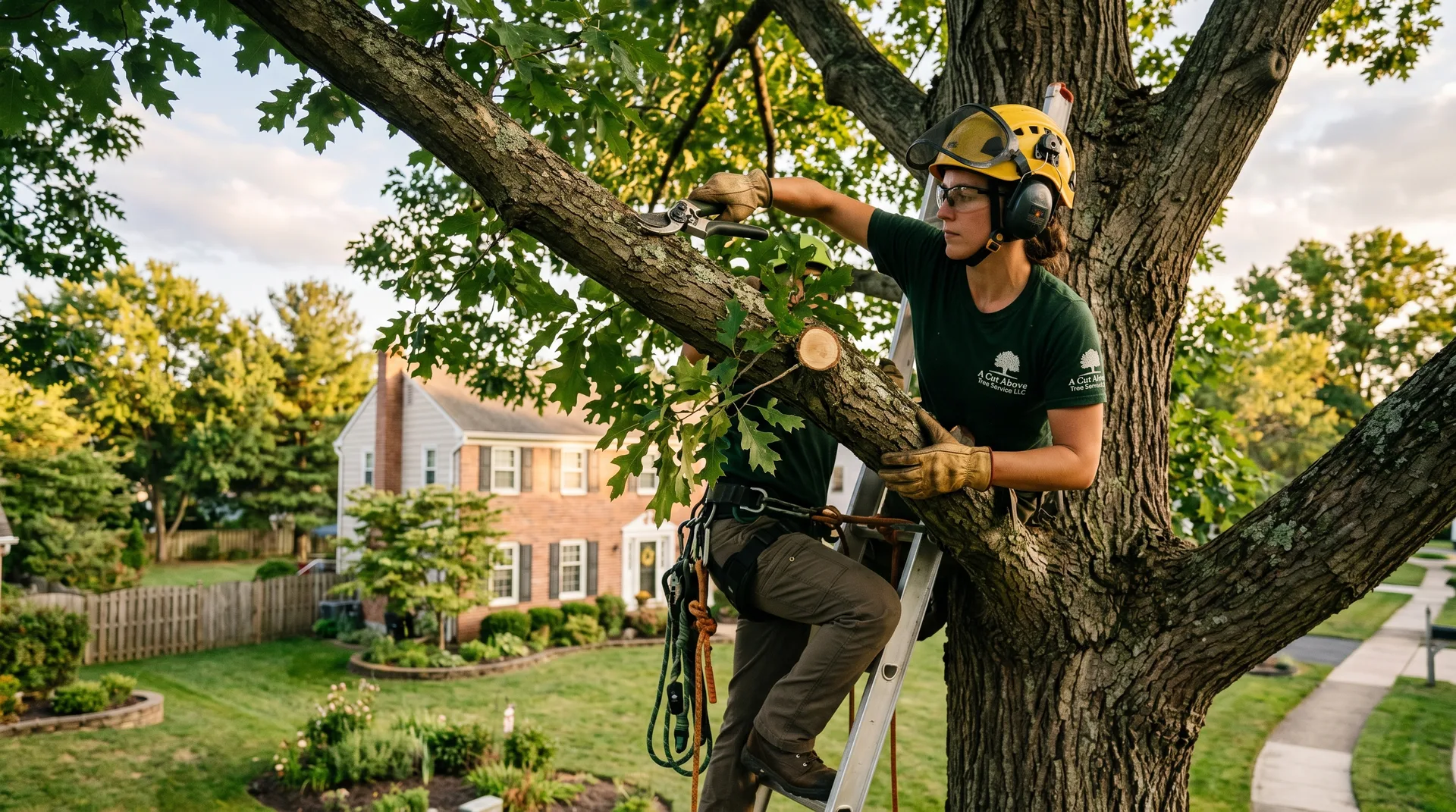
Professional Tree Trimming & Pruning in South Jersey
Proper trimming and pruning keeps your trees healthy, your property safe, and your yard looking sharp. We have been doing this work across Burlington, Camden, and Gloucester Counties for over 20 years. We know the difference between a good cut and one that damages a tree for years.
What Proper Tree Trimming Actually Looks Like
Bad pruning is one of the most common ways trees get damaged in South Jersey. Topping a tree, improper cuts, leaving branch stubs, and over pruning — these mistakes stress the tree, invite disease, and create structural problems that show up years later.
When we trim a tree, we make cuts at recommended branch collar. We do not remove more than 25-30% of the live canopy in a single season. We identify which branches to take and which ones to leave based on the structure of the tree, not just what looks tidy from the curb.
The goal is a tree that is safer, healthier, and better structured for the long term. If you also have trees that need to come down entirely, check out our tree removal service — we handle both on the same visit when needed.
What We Trim and Why
Not all trimming is the same. Here is a breakdown of the different types of pruning work we do and what each one accomplishes.
Dead Branch Removal
Dead limbs are a safety hazard. They can fall without warning — especially in wind or ice storms. Removing them is the single most important thing you can do for both safety and tree health. It also prevents decay from spreading deeper into the trunk.
Crown Thinning
Thinning removes select branches throughout the canopy to increase light penetration and air movement. It reduces wind resistance, which lowers the risk of branch failure in storms. A properly thinned crown looks natural — not stripped.
Clearance Trimming
Branches growing over roofs, into service lines, or rubbing against structures need to be cleared back. This protects your home and reduces liability. We trim to a safe clearance distance and make cuts that discourage aggressive regrowth.
Structural Pruning
Young trees benefit most from structural pruning. Establishing a strong central leader, removing co-dominant stems, and correcting early defects prevents major problems down the road. The best time to fix a tree's structure is before the branches get big.
Vista and Light Pruning
Want more light in your yard or a better view? We can selectively remove branches to open up sightlines and let sunlight reach your lawn or garden. This is more surgical than standard trimming and requires knowing which branches to take without hurting the tree.
Storm Prep Trimming
Before hurricane season or a major storm, having your trees trimmed reduces the risk of branch failure. We identify and remove weak, overextended, or crossing branches that are most likely to fail under wind and ice load. Pair this with our storm damage response service for full coverage.
Not sure what your trees need? We'll take a look — no charge.
When Is the Best Time to Trim Trees in New Jersey?
Timing matters for tree health. The right window depends on the species and what you are trying to accomplish.
For most trees in New Jersey, the best time to trim is late fall through late winter (roughly November through March) while the trees are dormant.
Here's a general guide
Shade Trees (oak, maple, ash, etc.)
Late WinterBest pruned in late winter before spring growth begins. This promotes healthy healing and makes it easier to see the tree’s structure.
Oak Trees
Nov – MarIdeally trimmed November through March to reduce the risk of attracting insects that spread oak wilt. Dormant-season pruning is the best practice even though oak wilt is less common in NJ than some other states.
Evergreens (pine, spruce, fir)
Late Winter – Early SpringLight pruning can be done in late winter or early spring. Avoid heavy pruning into old wood.
Flowering Trees
Bloom-DependentPrune based on when they bloom. Trees that bloom in spring (dogwood, redbud, magnolia) should be pruned after they finish flowering. Trees that bloom in summer can be pruned during dormancy.
Some Exceptions
- 1Dead, broken, hazardous, or storm-damaged limbs should be removed immediately, regardless of the season.
- 2If branches are threatening a home, power lines, or blocking roads or driveways, safety takes priority over timing.
When is the best time to trim trees in New Jersey?
The ideal time is during the dormant season, from late fall through late winter, when trees are less stressed and pruning promotes healthier spring growth. However, hazardous, damaged, or dead branches should be removed as soon as they're identified to keep your property safe.
Why Bad Trimming Is Worse Than No Trimming
We get calls every year from homeowners who had a cheap crew come through and now have trees that look terrible, are growing back worse than before, or are showing signs of disease. Bad pruning is not just an aesthetic problem — it can shorten a tree's life.
Tree Topping
Cutting the top out of a tree destroys its structure, leaves massive wounds that cannot seal, and triggers vigorous but weakly attached regrowth. Topped trees are more hazardous, not less.
Flush Cuts
Cutting a branch flush with the trunk removes the branch collar — the tissue the tree uses to seal over a wound. Without it, decay enters the tree and spreads. Every cut should leave the collar intact.
Over-Pruning
Removing too much of the canopy at once stresses the tree severely. It triggers weak epicormic growth, depletes energy reserves, and can kill a tree that was otherwise healthy.
Lion-Tailing
Stripping all the foliage from the interior and leaving tufts only at branch tips creates an unbalanced tree that is more susceptible to wind damage and branch failure.
What to Ask Any Tree Company Before They Touch Your Trees
- 1Are you fully insured with general liability and workers comp?
- 2Can you show me your certificate of insurance before starting?
- 3What pruning standard do you follow? (ISA standards are the benchmark)
- 4Will you be making cuts at the branch collar, not flush with the trunk?
- 5How much of the canopy do you plan to remove?
- 6Who is actually doing the work — your crew or a subcontractor?
We are happy to answer all of these questions before we start. Call us at 609-685-1141.
Tree Trimming Across South Jersey
We serve Burlington County, Camden County, and Gloucester County NJ. If you are not sure whether we cover your area, just call us.
Burlington County
Camden County
Gloucester County
Don't see your town? Give us a call — we likely cover it.
Call 609-685-1141We Also Handle
Tree Removal
Dead, dangerous, or unwanted trees removed safely. Climbing removals, crane-assisted jobs, and everything in between.
Tree Removal ServiceStorm Damage Response
Tree down on your house or blocking your driveway? We respond 24/7 to storm emergencies across South Jersey.
Storm Damage ResponseService Areas
We cover Burlington, Camden, and Gloucester Counties. See all the towns we serve across South Jersey.
View All Service AreasCommon Questions About Tree Trimming
Ready to Get Started?
Fill out the form and we'll get back to you within a few hours. Or call us directly — we pick up fast.
609-685-1141
Free estimates — fast response
Also Need Tree Removal?
We handle trimming and removal on the same visit. See our Tree Removal page.